
December 23, 2025
Everest-X Shelf Model Now Available
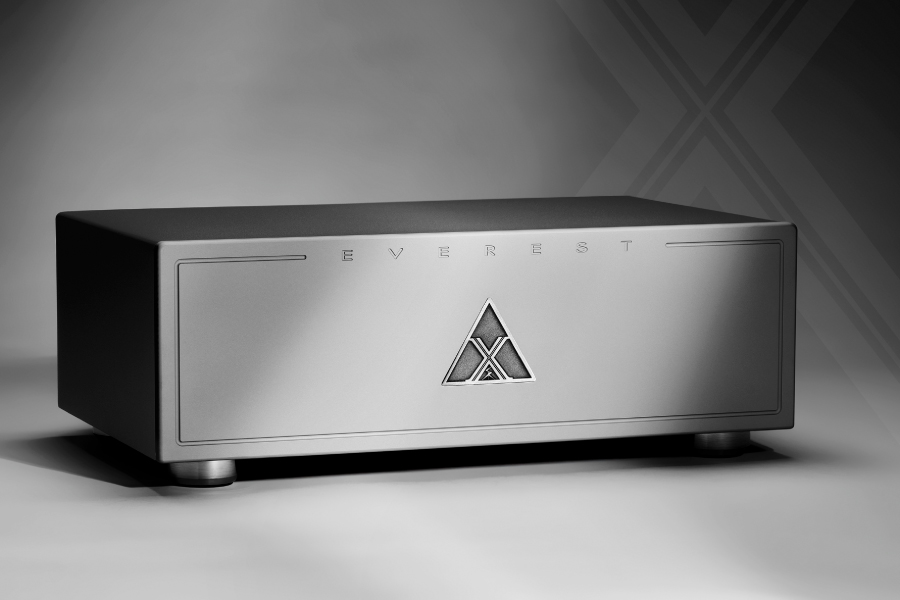
New Form Factor, Same Award-Winning Performance
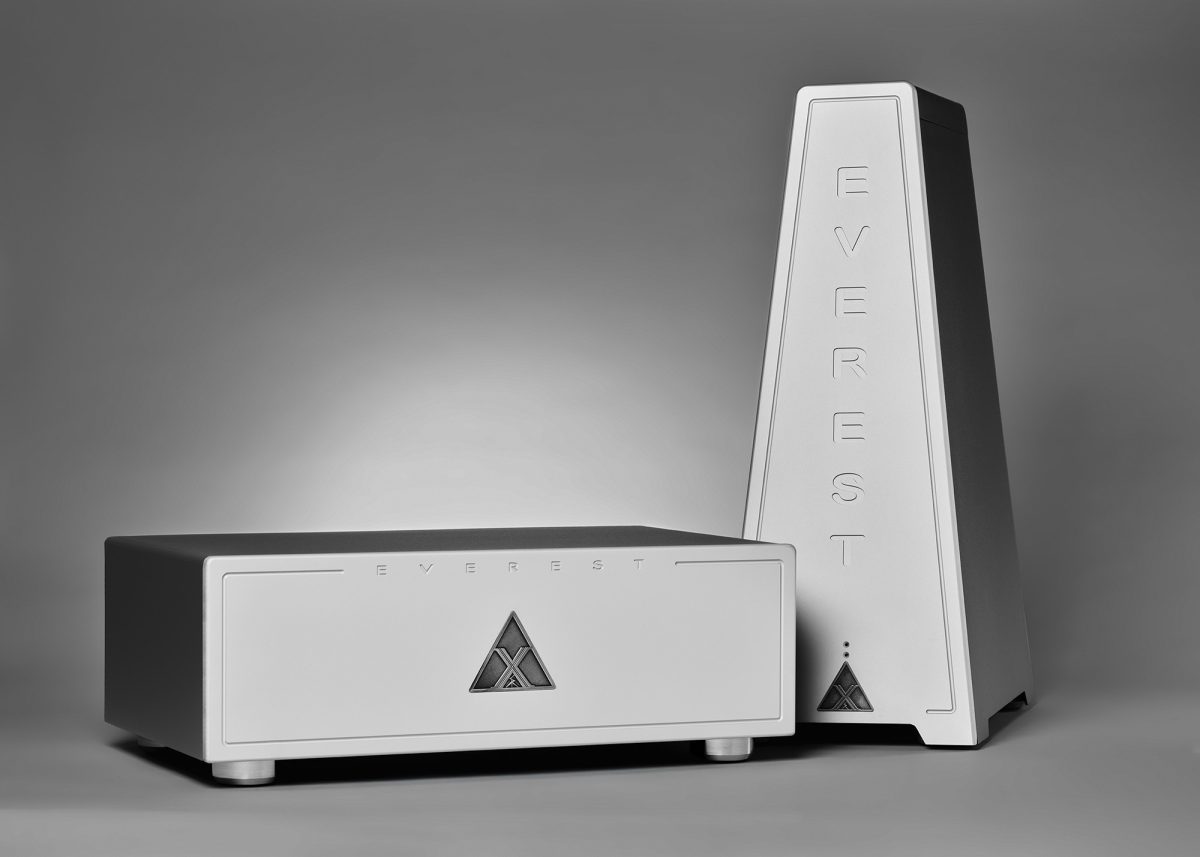
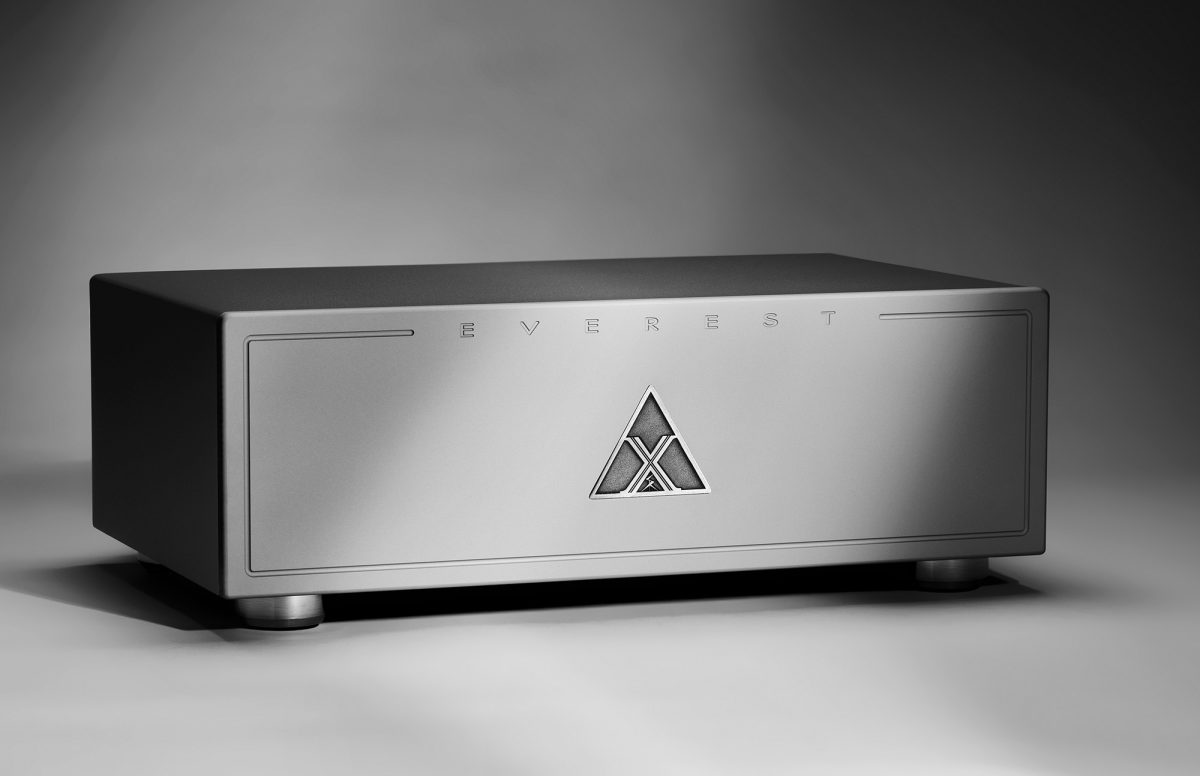
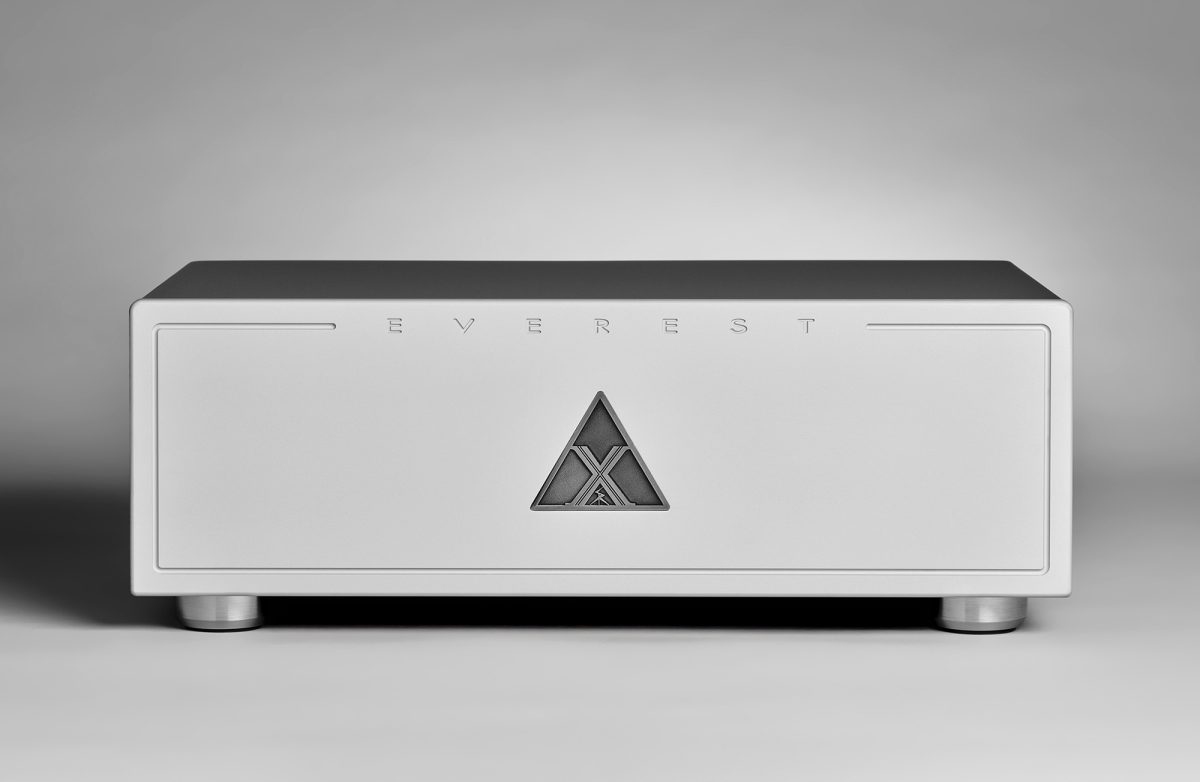
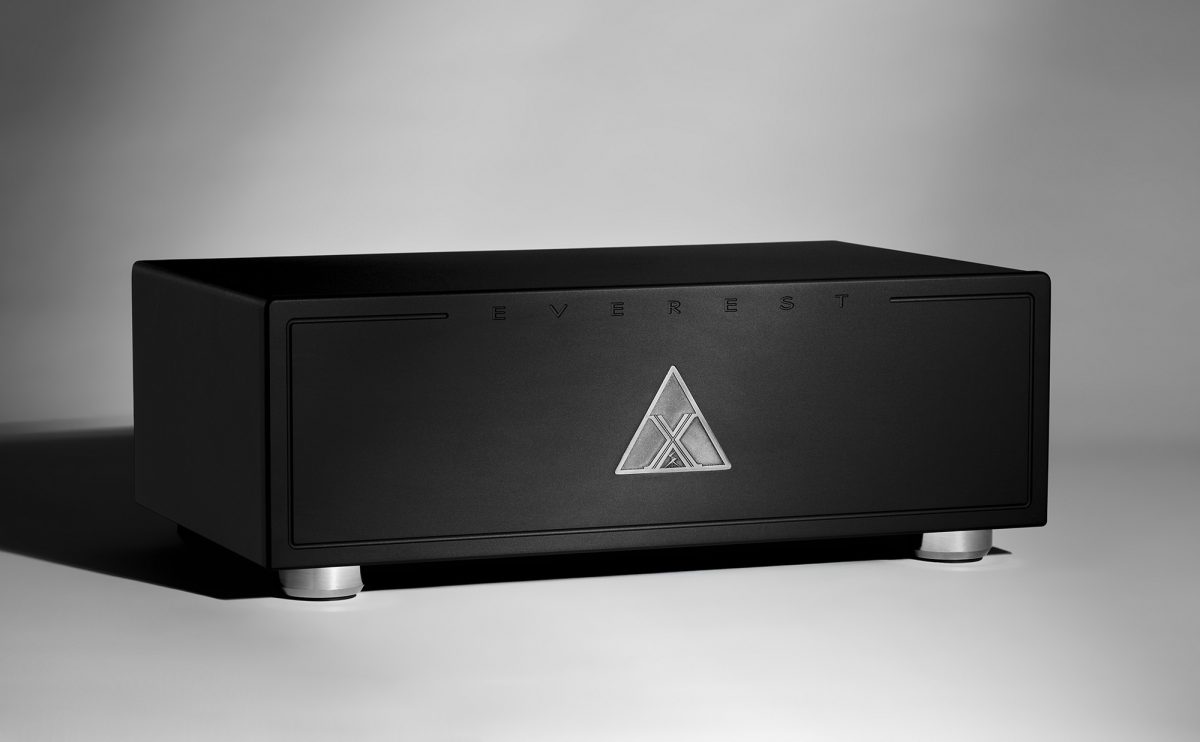
Shunyata Research’s award-winning Everest-X power distributor is now available in two elegant form factors. Joining the original vertical tower is the new Everest-X Shelf, a low-profile model designed to fit seamlessly into standard audio rack systems.
While the form factor has changed, the core remains identical. The Everest-X Shelf delivers the same groundbreaking design, noise-reduction science, and uncompromising performance that earned the Everest-X tower its status as a reference-level component in the world’s most demanding systems.
Both variants are built to elevate everything they power—bringing unmatched clarity, timing precision, and musical realism to your listening or mastering space.
Now there’s no need to choose between top-tier performance and system compatibility. With Everest-X, you get both.
CRITICAL TECHNOLOGIES IN EVEREST-X

TAPc (Transverse Axial Polarizer) is a patent-pending technology that couples to the electromagnetic fields surrounding electrical or signal conductors. TAPc behaves like a polarizer, passively reducing electromagnetic distortion that presents as a type of glare on sound or images.
The sonic impact of TAPc is unmistakable. There is a profound drop in perceived noise floor, effortlessly portrayed dynamics and an immediate improvement in the rendering of timing and coherency in sound. These performance elements are unique to TAPc and remain unaddressed by competing technologies of any kind. Even casual listeners can recognize the effect TAPc has upon first listen. Results are consistent across a wide range of components and systems. Essentially, the TAPc modules act as force multipliers, elevating the listening experience to levels many would not have thought possible.

POWER HARP technology, originally developed to address current resonances in speaker cables, has now been adapted for power distribution in the Everest-X. Through extensive research, Caelin Gabriel identified the presence of current drift and audio-frequency current resonances within power delivery systems, much like standing wave modes in room acoustics. In the Everest-X, the HARP module functions as a current-mode diffraction device, disrupting these resonances to enhance resolution, coherence, and dynamic stability across connected components. By mitigating these power system artifacts, HARP technology helps create a more refined, noise free listening experience, allowing the full potential of a system to be realized.

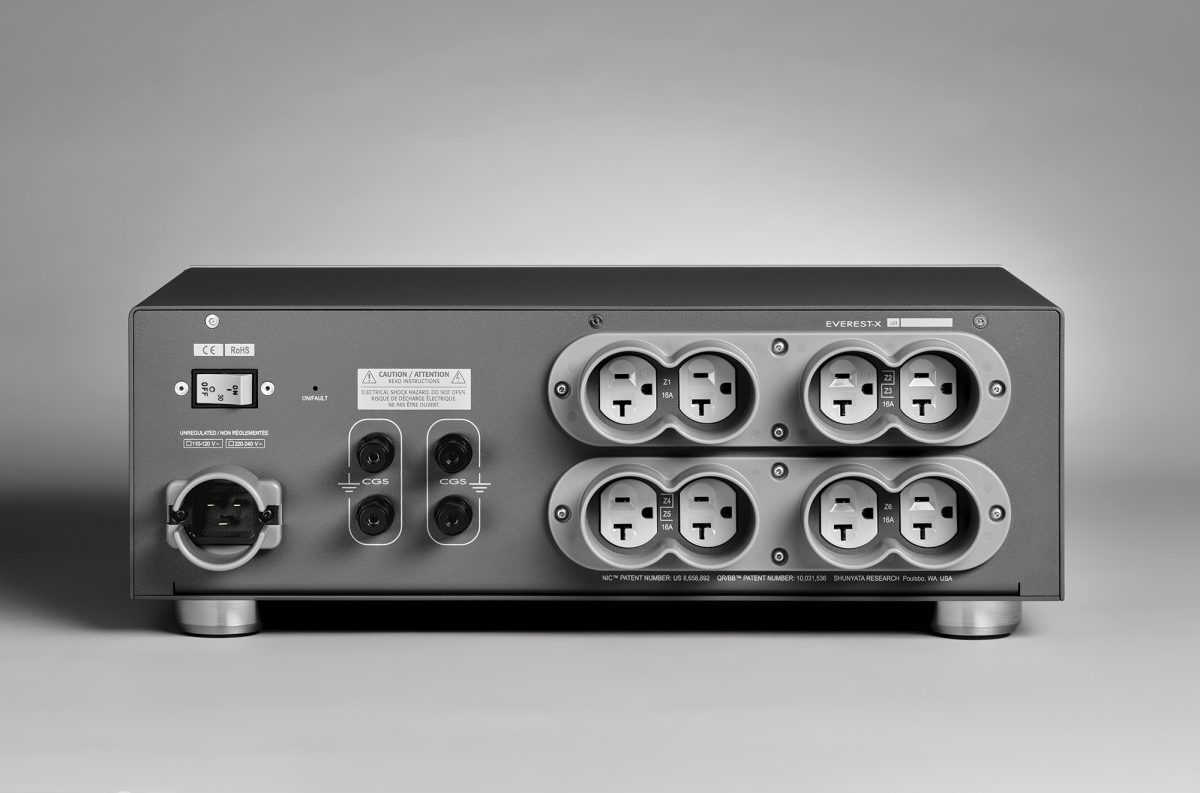
The QR/BB™ is a patented device which dramatically enhances the perception of dynamic impact and timing when connected to amplifiers or other high-current electronics. The QR/BB™ is unique in that it provides a local reserve of energy, or Coulomb charge, that mitigates the inductive reactance of the AC power line without using coils, transformers or capacitors. The QR/BB™ acts as an instantaneous energy reserve when placed in-line with an AC power supply.
— Patent Number: US 10,031,536 —

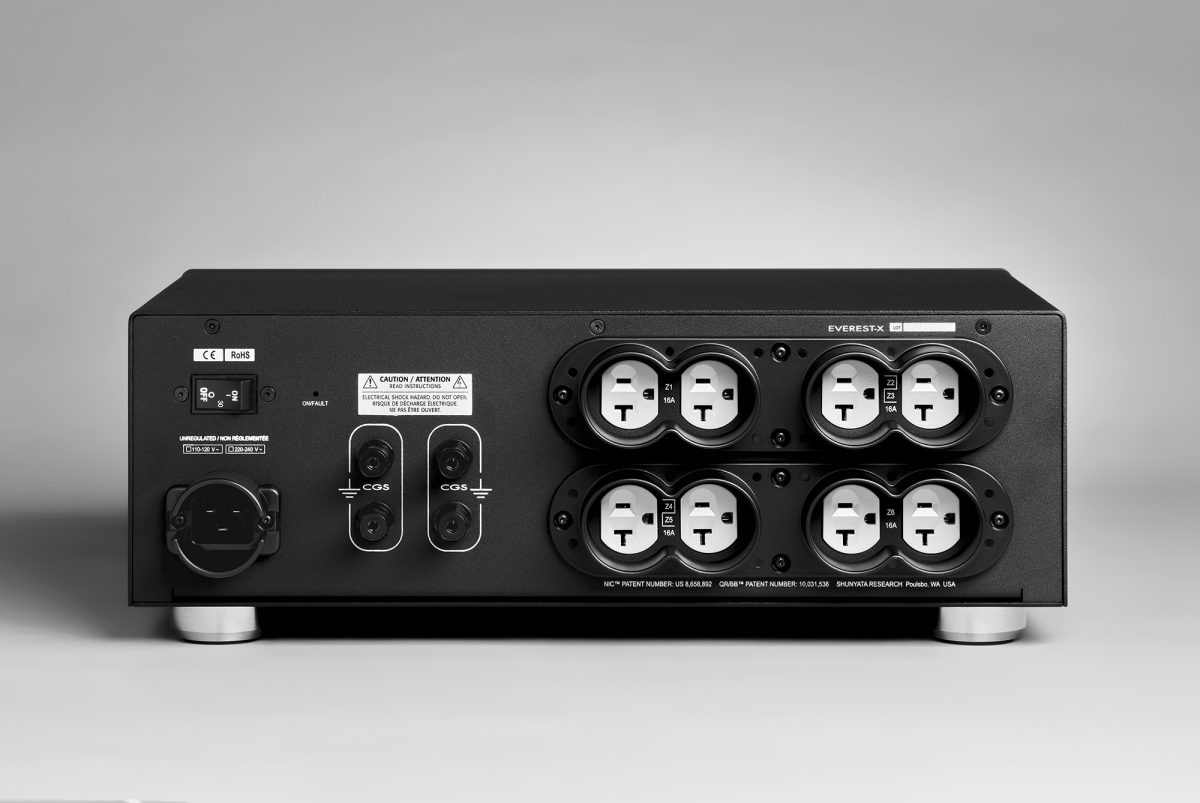
GPNR (Ground Plane Noise Reduction) is an advanced ground noise filtering system engineered to reduce high-frequency interference that pollutes the ground plane of audio and video systems. GPNR provides continuous ground-plane noise reduction for all connected components, with no setup required. Components connected to the power distributor’s CGS (Chassis Grounding System) terminal via an external ground cable can access even higher performance by providing an ultra low impedance path to the GPNR filtration system. This enhances noise dissipation beyond what is possible through the standard AC ground path alone. By cleaning the system’s ground plane, GPNR dramatically lowers the system’s noise floor, preserving clarity, enhancing timing precision, and revealing subtle musical and spatial detail.
GPNR (Ground Plane Noise Reduction) is an advanced ground noise filtering system engineered to reduce high-frequency interference that pollutes the ground plane of audio and video systems. GPNR provides continuous ground-plane noise reduction for all connected components, with no setup required. Components connected to the power distributor’s CGS (Chassis Grounding System) terminal via an external ground cable can access even higher performance by providing an ultra low impedance path to the GPNR filtration system. This enhances noise dissipation beyond what is possible through the standard AC ground path alone. By cleaning the system’s ground plane, GPNR dramatically lowers the system’s noise floor, preserving clarity, enhancing timing precision, and revealing subtle musical and spatial detail.
Common-mode noise is different than differential noise and is much more difficult to measure and eliminate. For the purest signal possible, Shunyata Research has developed a CMode filter that effectively reduces common-mode noise without introducing the sonic compression effects associated with conventional filters. It reduces high-frequency noise distortion while delivering an analog ease and palpable background silence that closes the gap between digital and analog systems.

KPIP v2™ Shunyata Research’s proprietary Kinetic Phase Inversion Process includes four days of continuous KPIP v2™ processing which refines conductor metals at the atomic level. This dramatically reduces burn-in time and significantly improves sonic performance, delivering a relaxed and life-like presentation. When compared to the original process, KPIP v2™ represents a dramatic performance upgrade on par with a component-level upgrade.